What Property Managers in the North Twin Cities Metro Should Expect From Their Snow Removal Contractor
If you manage multifamily properties in the North Twin Cities Metro, you've probably already been burned by a snow contractor once. A truck that shows up late. A lot that's "cleared" except for the one entrance a resident slips on. A phone call that goes to voicemail during the exact storm you needed answered. None of that is unusual in this industry — which is exactly why it's worth knowing what a properly run snow removal contract should actually include before you sign the next one.
Start With Trigger Depth, Not Just "We Plow When It Snows"
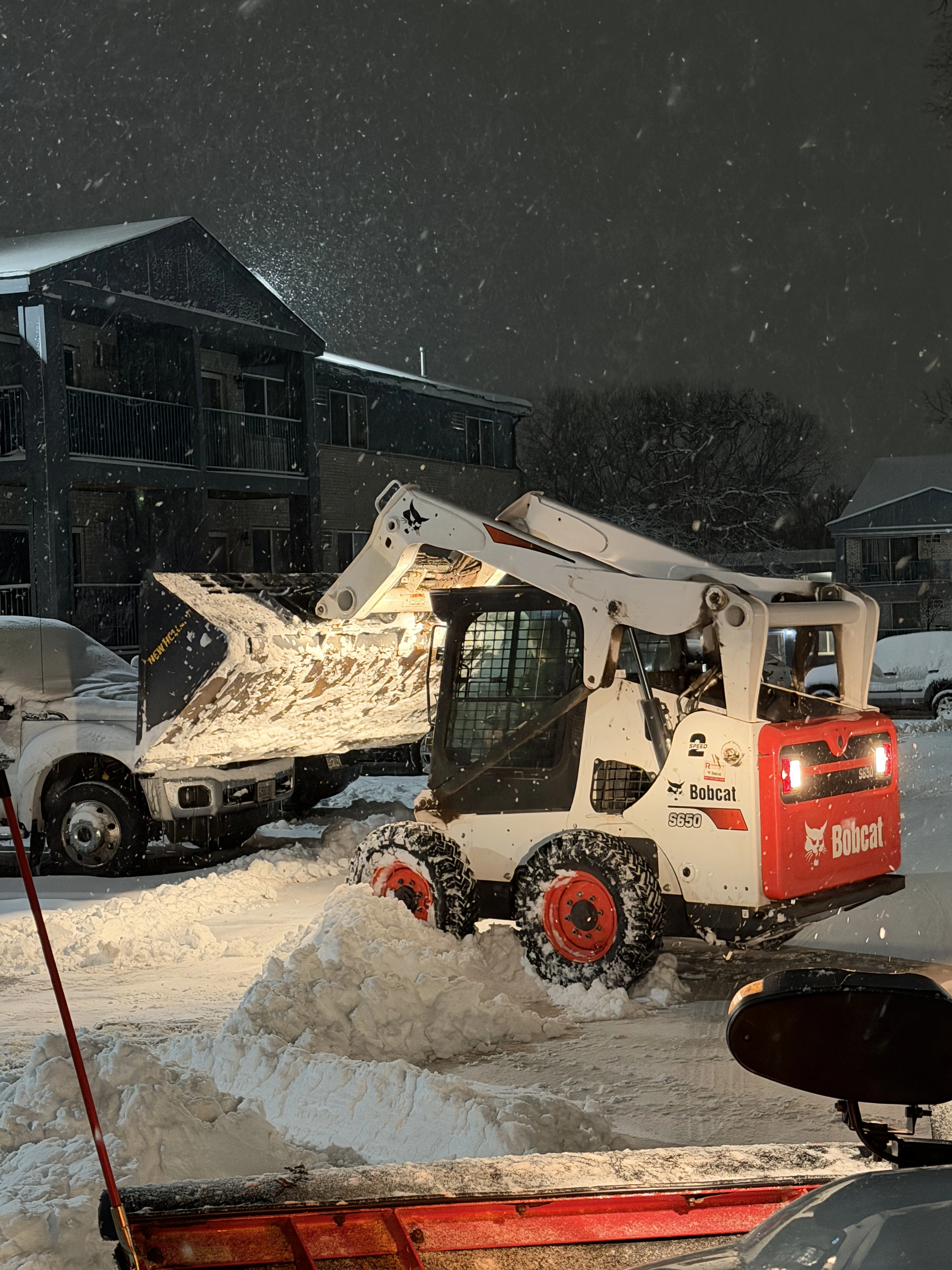
A real snow contract specifies a trigger depth — the accumulation threshold that dispatches a crew automatically, without you having to call and ask. For most multifamily parking lots and drive lanes, that's typically somewhere between one and two inches. Walkways and building entrances often carry a lower trigger, since foot traffic turns a light dusting into ice much faster than a parking lot does.
If a contractor can't tell you their trigger depth in a sentence, that's a sign the schedule runs on guesswork instead of a standard. Ask for it in writing, for both lots and walkways, before you sign anything.
Response Time Should Be a Number, Not a Feeling
"We're usually pretty quick" is not a response time. A contract worth signing states how many hours after the trigger is hit the property will be plowed, and separately, how quickly a follow-up ice event gets addressed. Response time matters because liability exposure on a property doesn't wait for a convenient afternoon — a resident, a delivery driver, or a maintenance tech can slip on an uncleared walkway at 7am just as easily as at 2pm.
Salting and Sanding Protocol
Plowing removes snow. It doesn't prevent the thin layer of ice that forms afterward, especially in shaded areas, near building entrances, and on ramps. A complete snow program includes a salting and sanding protocol that's proactive at known trouble spots, not reactive only after someone calls in a complaint. Ask what triggers a salt application separately from a plow, and ask specifically about the entrances and ramps on your property that ice over first.
Documentation You Should Be Getting Automatically
This is the piece most property managers don't know to ask for until they've already been burned. You should receive some form of service confirmation — timestamped, ideally with notes on conditions and what was done — after every visit, not just when something goes wrong. That documentation matters for two reasons: it gives you something concrete to reference if a slip-and-fall claim ever comes up, and it removes the guessing game of whether the crew actually showed up.
"I am not left wondering if the crew is going to come out. They pick up when you call." — Joseph M., Property Owner
Questions to Ask Before You Sign
- What's your trigger depth for lots, drive lanes, and walkways?
- What's your response time after the trigger is hit, and after an ice event?
- Do you send a report or confirmation after each visit, and what does it include?
- How many properties does one crew cover, and where does mine fall in the route?
- What's your insurance coverage, and can I get a certificate naming us as additional insured?
How Clearline Approaches It
We run snow removal the way we'd want it run if we were still on the ownership side of the table: trigger-depth dispatch across every property on our route, salting at known trouble spots before they refreeze, and a day-of confirmation so you know the property was handled before you have to check a camera or make a call. We're insured at $2 million, and every property manager we work with gets a real phone number that gets answered — not a call center queue.
If your current snow contract doesn't answer the questions above in writing, it's worth a conversation before the next storm, not during it.