Why Late August Is When Smart Property Managers Lock In Snow Removal
It's easy to put snow removal out of mind while the mowers are still running. But by the time the first flakes actually show up, the property managers who locked in a vendor back in August are already covered. The ones who waited are calling around during the storm, hoping someone has room left on their route. Here's why the timing matters more than most people think, and what's actually happening behind the scenes between now and the first plow.
The Twin Cities Snow Season Doesn't Wait for a Convenient Date
According to Minnesota DNR climate records going back to 1884, the median date for the Twin Cities' first one-inch snowfall is November 15. That's a median, not a guarantee. The earliest one-inch snowfall on record hit on September 26, 1942, and in more recent memory, the metro saw 7.9 inches on October 20, 2020, and another one-inch-plus event on October 31, 2023.
The point isn't that a September blizzard is likely. It's that "we've got until Thanksgiving" is a bet, not a plan. A contract signed in late August is covered no matter which way that bet goes. A contract still being negotiated in November is a gamble on top of a gamble.
Route Density Gets Built in September, Not During the First Storm
A snow contractor's route isn't built the night before a storm. Properties get grouped geographically weeks in advance so a crew can move from one lot to the next with minimal drive time between stops. That planning happens based on who has already signed by early fall, not who calls once the snow starts.
A property that signs in August gets built into that route from the start, in a position that makes sense for the crew's territory. A property that signs in November gets bolted onto the end of an existing route or handed to a secondary crew, because the primary routes are already set. Neither of those is a knock on the contractor. It's just how route logic works, and it's exactly why response time so often gets worse the later a contract gets signed.
Insurance Paperwork Takes Longer Than Most People Expect
Even after a property manager picks a vendor, there's usually a certificate of insurance to process, an additional-insured endorsement to request, and a W-9 to route through accounting or a management company's vendor onboarding system. Depending on the carrier and how many properties are in a portfolio, that alone can take one to three weeks. Start that process in November and it's entirely possible the paperwork isn't finished before the first storm hits, even with a good vendor already chosen.
Pricing Reflects Capacity, Not Just the Weather
Most snow contractors set season pricing based on the crews and equipment they can commit to before the season starts. Once that capacity is allocated to properties already under contract, what's left over often gets covered on a per-visit, emergency basis instead of a set seasonal rate. That's typically the more expensive way to get a lot plowed, and it comes with less certainty about when a crew will actually show up.
What to Actually Do This Month
- Walk the property now and flag the trouble spots: entrances, ramps, shaded areas that ice over first.
- Get trigger depth and response time in writing for both lots and walkways, not a verbal understanding.
- Confirm your actual position on the route, not just a yes that you're covered.
- Start the certificate of insurance and W-9 process immediately if you're using a new vendor.
- If you're staying with last year's contractor, confirm the contract is actually signed for this season. A handshake from last February doesn't carry over.
"When ice built up at one of our entrances, they came out the same day to fix it and set a plan to prevent it going forward." — Eric W., Property Owner
How Clearline Approaches It
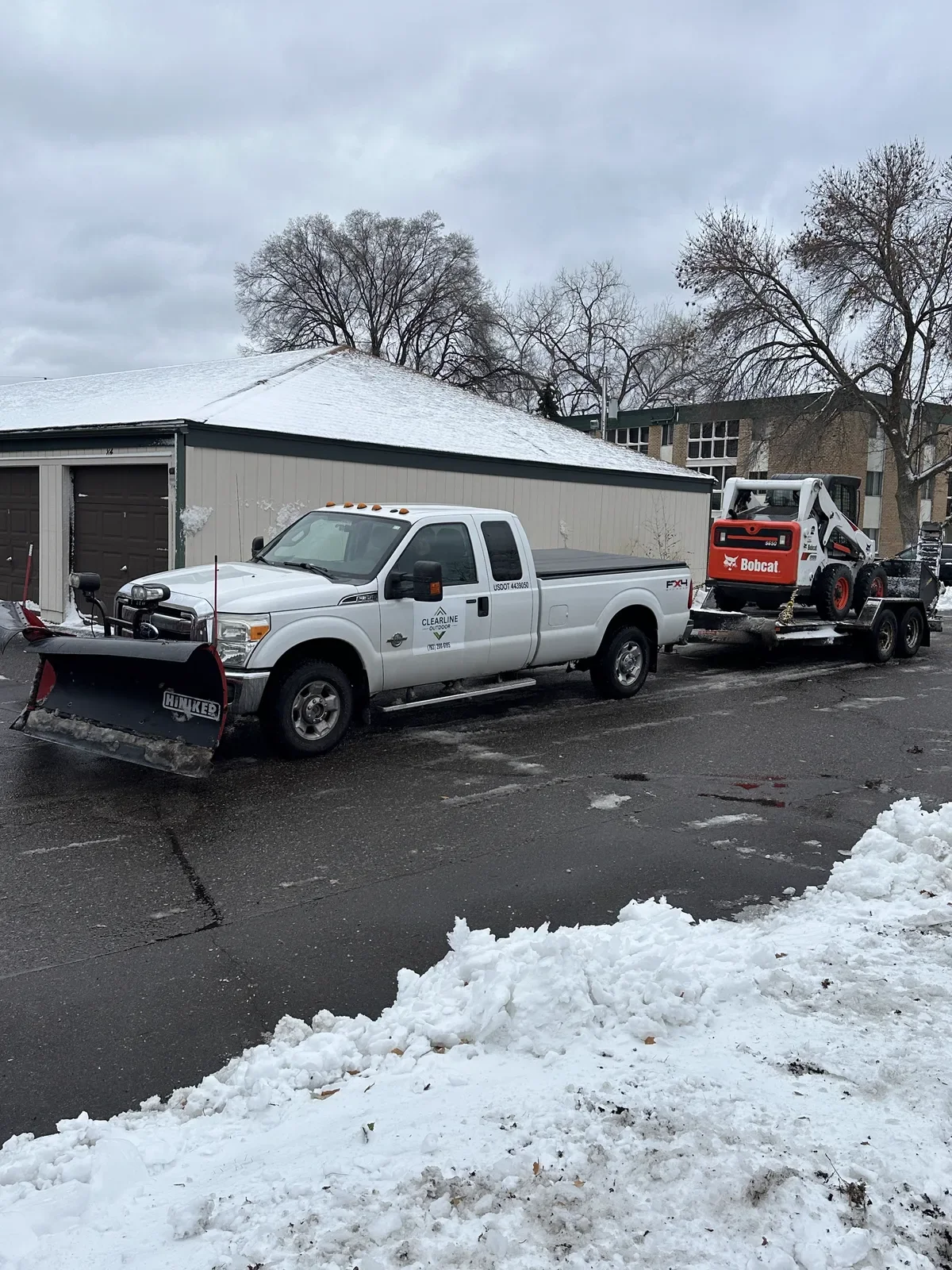
We build our snow routes across the North Metro starting in late summer, based on who's under contract, so response time is set by design rather than by whoever happens to have room left in November. Every property gets trigger-depth dispatch in writing, salting at known trouble spots before they refreeze, and a day-of confirmation after each visit. We're insured at $2 million and can usually turn around a certificate of insurance within a few business days, not a few weeks.
If your current snow contract isn't locked in yet, or you're not sure where you actually fall on your contractor's route, it's worth a conversation this week rather than during the first storm.