
Spring Grounds Prep for Multifamily Properties in Minnesota — What to Prioritize and When
Spring in the North Twin Cities Metro doesn't arrive on a fixed date — it arrives in a sequence, and the properties that look sharp by May are the ones whose vendor schedule followed that sequence instead of waiting for someone to notice the grounds still look like March. Here's the order multifamily properties in this region should actually be working through, and why the timing matters more than most owners realize.
Phase 1: Snowmelt and Debris Removal
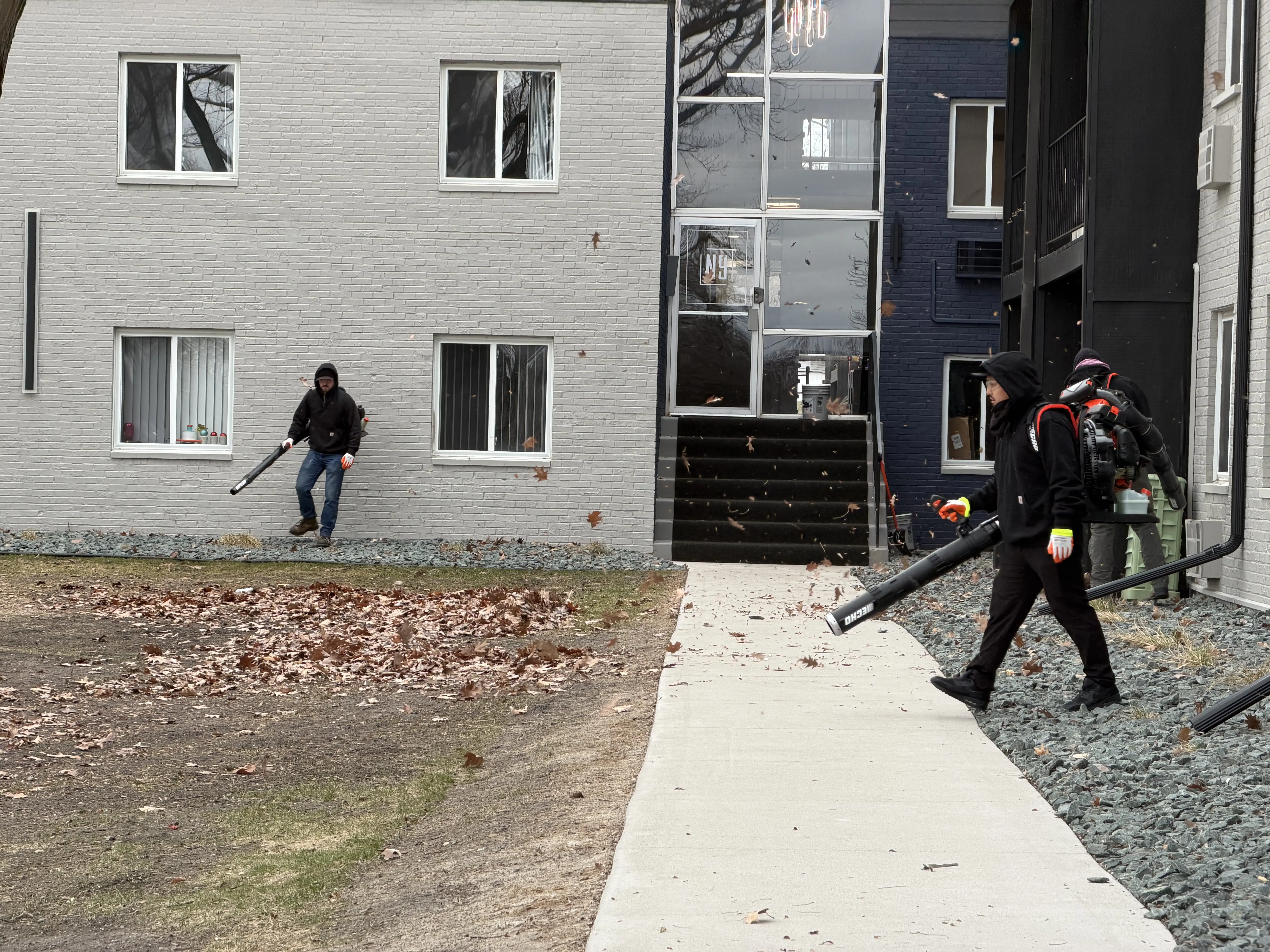
As soon as the snowpack clears, whatever was under it — sand and salt residue from winter plowing, trapped leaves, trash blown in over the winter — is sitting directly on top of turf that's trying to wake up. Left too long, that debris layer blocks sunlight and traps moisture against the grass, which is exactly the condition that produces dead patches and snow mold. This is the cleanup window that gets skipped most often because it doesn't look urgent yet, and it's the one with the highest cost of delay.
Phase 2: Turf Assessment
Once debris is cleared, this is the point to actually walk the property and assess what winter did to the lawn — salt damage along walkways and drive lanes, compaction from snow storage piles, bare or thin patches that will need seeding. Properties that skip this step tend to discover the damage in June, when it's a bigger and more visible problem, instead of in April, when it's a line item on a proposal.
Phase 3: The First Mow Window
Mowing too early, while the ground is still soft, tears up turf and leaves ruts that take the rest of the season to fill in. Mowing too late lets grass get shaggy, which looks like neglect to residents and prospective tenants alike, even if it's only been a week or two. The right first-mow window in this region is tied to ground firmness and grass height, not a calendar date — which is why it should be handled by a crew running multiple properties and watching conditions in real time, not a single fixed date on a contract.
Phase 4: Irrigation Startup
If a system was properly winterized in the fall, spring startup is straightforward: pressurize the lines, check every zone and head for damage, and confirm coverage before the first hot stretch. If it wasn't blown out correctly, this is where a cracked line or backflow device shows up — usually as a surprise repair bill that could have been caught in a five-minute check instead of a flooded bed in July.
Phase 5: Bed Edging and Planting Reset
Winter plowing and snow storage push mulch and edging out of place along parking lots and walkways. Resetting bed edges and refreshing mulch is the detail that makes a property look intentionally maintained rather than just "not overgrown" — it's a small line item with an outsized effect on curb appeal and leasing tour impressions.
Why Waiting Costs More
Every phase above gets more expensive the longer it's delayed. Debris left too long kills turf that then needs reseeding. Salt damage left unaddressed spreads as the season goes on. A cracked irrigation line found in July is a mid-season repair and a dead patch of lawn, instead of a five-minute fix in April. None of that shows up in month one — it shows up as a bigger invoice, and a worse-looking property, two months later.
"They've done an amazing job with our landscaping this spring and they're always on top of keeping our lawn looking pristine." — Diane, Property Manager, Plymouth Commons
How We Handle It
We build spring grounds work into the standing schedule for every property we service, sequenced to actual North Metro conditions rather than a generic template — debris removal and turf assessment first, first mow timed to ground conditions, irrigation startup and bed reset following close behind. You get a written report after each visit, so you know exactly where your property stands in the sequence without having to walk the site yourself.